Plan around the way you relax
Think about what happens in your living room on a normal evening. You may need comfortable seating for conversation, a quiet reading spot or a clear view of the television. Draw the room with doors and windows marked, then leave practical routes between them. Try the furniture footprint with masking tape before ordering large pieces.
Build a quiet colour palette
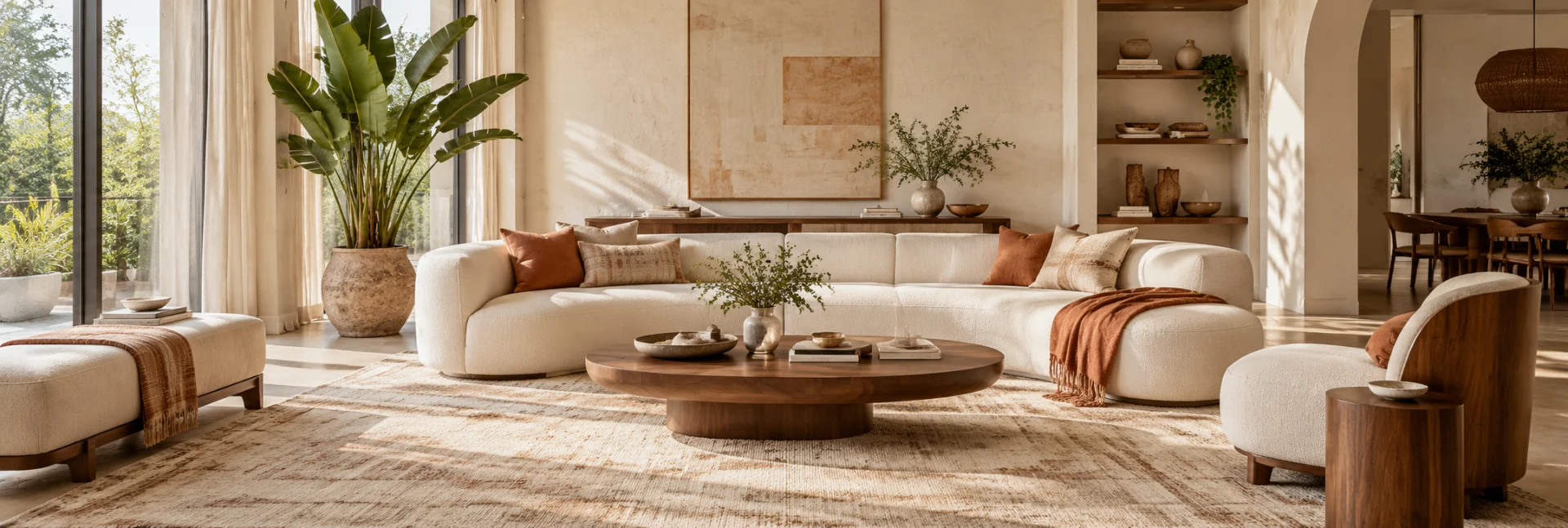
Start with one main wall colour and a small set of complementary finishes. Warm neutrals, natural timber and textured fabric can be a useful starting point. Test paint samples on different walls and look at them in daylight and evening light. The right palette is the one that works with your room and the pieces you want to keep.
Layer the lighting
Combine general room lighting with focused light for reading and softer light for the evening. A floor lamp near an armchair or a table lamp on a console can make the room more flexible. Check socket positions and cable routes before buying. Electrical changes should be planned and completed by a qualified professional.
Add texture before more objects
A woven rug, soft curtains and a few cushions can bring variety without crowding the room. Choose fabrics that suit your household and cleaning routine. Size a rug against the seating arrangement rather than the empty floor, and check that curtains can move freely around nearby furniture.
Finish with a few personal details
Use artwork, books or photographs that mean something to you. Group small pieces so surfaces still have room for everyday use. Live with the arrangement for a few days, then adjust anything that interrupts movement or feels difficult to maintain. A welcoming room should support real life as well as look inviting.